Whether you’re a world traveler who’s flown on dozens of planes or whether you’ve only seen them in photos, you likely recognize some features of airplane design.
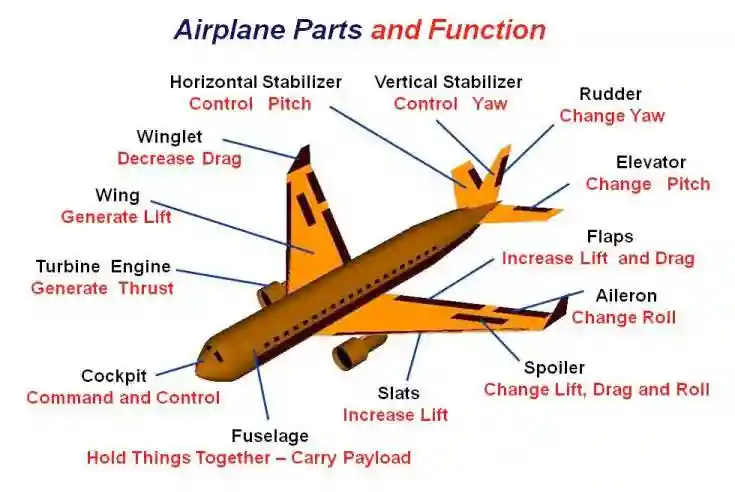
Here are some helpful terms to know about things that fly:
Lift is the force that pushes the airplane up. It is created by the air moving around the plane. The shape of the wings helps create lift and is very important in plane design.
Weight is the force that pulls the airplane toward Earth. Commercial airplanes are built so that their weight is spread from front to back, helping to keep the plane balanced. Paper airplanes often concentrate weight in specific places in the design to help the plane maintain a flight path.
Thrust is the force that moves the airplane forward. Commercial airplanes use engines to maintain thrust. Gliders and paper airplanes must rely mostly on an initual push or throw.
Drag is the force that slows down the airplane. Commercial airplanes are designed to let air pass around them with minimal drag. Some paper airplanes designs include features that increase drag slightly in order to create a more steady flight or to create a distinctive flight path.
Pitch is the angle of the the plane from the front to the back. If a plane is pitched forward, its front or nose is lower than its tail.
Roll is the angel of the plane from side to side. If a plane rolls left, then the the left side of the plane is lower than the right.
Yaw is used to descibe the horizontal motion of the plane from side to side. Imagine a plane flying straight away from you with its wings horizonal - its nose would appear in line with its tail. If that plane were to yaw right, it would would appear be turning right (while the wings remained horizontal) - the nose would appear to be further right than the tail.
Note: changes in pitch, roll, and yaw often happen at the same time. In fact, to achieve a smooth flight a pilot will adjust the controls for all three, to "bank to one side". This effectively uses the planes lift to turn.
When engineers are designing solutions, they often create a model to test their designs. With airplanes, it’s especially important to test models for things such as the shape of the wings and front of the plane (called the “nose cone”) before building a full-size version.